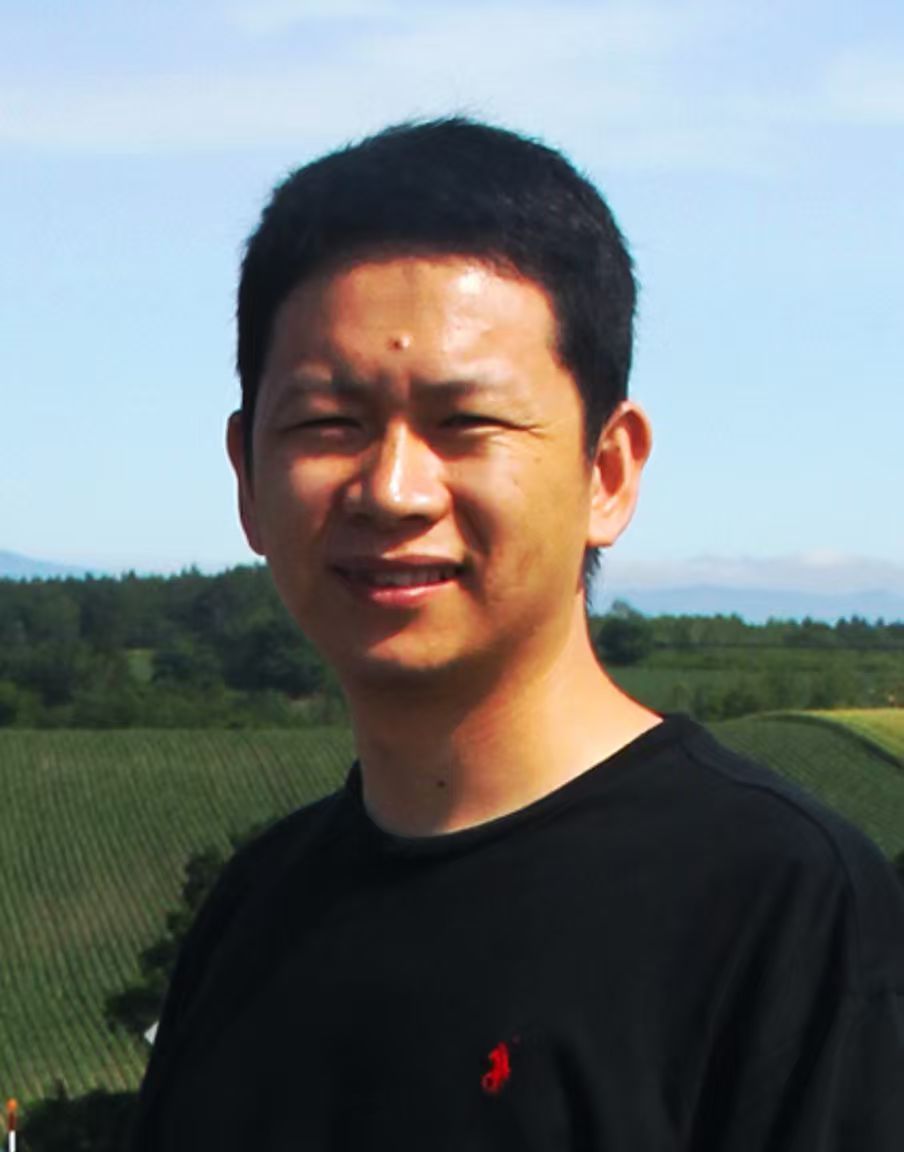
Jiming Chen
Biography:
Jiming Chen received the Ph.D. degree in Control Science and Engineering from Zhejiang University in 2005. He was vice Dean of Faculty of Information Technology, deputy director of the State Key laboratory of Industrial Control Technology, and Director of Industrial Process Control, Zhejiang University. He was a visiting researcher at the University of Waterloo from 2008 to 2010. Now he is a Chair Professor with the Department of Control Science and Engineering, Zhejiang University, and also is the president of Zhejiang University of Technology.
He is the Editor in Chief of IEEE Networks, He also serves/served on the editorial boards of multiple IEEE Transactions, e.g., IEEE TNCS, IEEE TPDS, IEEE TIE, IEEE TFS and the General Co-chairs for mulitple IEEE/ACM conference. He was a recipient of the IEEE ComSoc Asia/Pacific Outstanding Paper Award, the JSPS Invitation Fellowship, the RS Newton Advanced Fellowships, and multiple best paper awards. He was a member of Fellow Evaluation Committee and an Distinguished Lecturer of IEEE VTS,a Fellow of IEEE and a Fellow of CAA. His research interests include industrial IoT, networked control, cyber security.
Title: AI and Multi-Agent Systems for Industry
Abstract:
This report focuses on the intelligent upgrading of the full lifecycle of industrial manufacturing, systematically exploring the application pathways and practical implementation of large models and multi-agent technologies in industrial scenarios. It will first outline the core challenges manufacturing enterprises face in intelligent transformation, analyzing common pain points such as data silos and reliance on manual experience in decision-making. Building on this, the report will examine three key directions: visual defect detection, abnormal behavior recognition, and multi-agent decision-making for complex business scenarios. Drawing on real industrial cases such as cocoon sorting, process inspection on automotive assembly lines, casting inspection, and intelligent production scheduling, it will provide an in-depth introduction to the design approaches and practical outcomes of these technologies. The lecture will also discuss how to build an industrial multi-agents to connect data and decision-making chains across production and operations, helping manufacturing enterprises transition from traditional production models to intelligent management models.
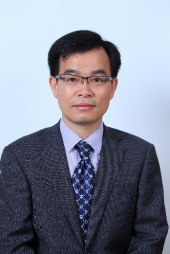
Fei Tao
Biography:
Dr. Fei Tao is a Professor at the School of Automation Science and Electrical Engineering and the Dean of the International Institute for Interdisciplinary and Frontiers at Beihang University, Beijing, China. His research focuses on smart manufacturing and digital twins. He has served as PI for over 30 national research and industry projects. He has published seven books and over 100 peer-reviewed journal articles as the first/corresponding author in Nature, CIRP Annals, and IEEE/ASME Transactions, with over 40 of them being ESI highly cited papers. His publications have over 60,000 citations. He was elected as the Global Highly Cited Researcher (2019-2025) and one of the 20 Most Influential Academics in Smart Manufacturing by SME in 2021. He is currently the Associate Editor of Robotics and Computer-Integrated Manufacturing (RCIM), CIRP Associate Member and IEEE Senior Member. He is the founding Editor-in-Chief of Digital Twin in Taylor & Francis Group and Digital Engineering in Elsevier; and he also initiated the Digital Twin Global Forum (DTGF) and the Digital Twin International Conferences (DigiTwin).
Title: Digital Twin: From Theory to Practice
Abstract:
Digital twin, a crucial technology for integrating physical and virtual spaces, have gained significant attention from both academia and industry over the past few years. To further broaden the applications of digital twin, this talk will introduce a series of related works we have conducted. First, the five-dimensional digital twin model is presented, encapsulating five key dimensions: physical entity, digital twin model, digital twin data, service, and their connections. Second, based on this model, a series of theoretical methods (including theories of digital twin modelling, digital twin data, digital twin connection and interaction), along with enabling technologies, essential tools, and standard systems for digital twin, are discussed. Third, two international journals (Digital Twin and Digital Engineering) and one international conference (Digital Twin International Conference) have been initiated to promote global collaboration in this field. Moreover, a digital twin software platform, named makeTwin, has been developed to address the lack of related software and platforms for practical applications. Finally, several industrial applications enabled by makeTwin will be briefly presented, particularly in smart manufacturing, aerospace, textile logistics, city management, and other sectors.

Andrea D’Ariano
Biography:
Andrea D’Ariano received the B.S. and M.S. degrees in Computer Science, Automation and Management Engineering at Roma Tre University. In November 2003, he joined TRAIL Research School and Department of Transport and Planning, Faculty of Civil Engineering and Geosciences, Delft University of Technology. In April 2008, he successfully concluded his Ph.D. studies under the supervision of Prof. Ingo A. Hansen. In 2018 and 2022, he got the Full Professor Italian Scientific Habilitation in Operations Research and Transportation Science. He served as Expert and Rapporteur for European Commission and numerous national research foundations. Currently, he is working as Full Professor at Department of Civil, Computer Science and Aeronautical Technologies Engineering, Roma Tre University. He is the former coordinator of the AIRO (Italian Association of Operations Research) Chapter on “Optimization in Public Transport and Shared Mobility”. He is Associate Editor of well-known international journals (e.g., Transportation Research Part B, C, E) and conferences (e.g., IEEE Int. Conf. on Intelligent Transportation Systems). His main research interest is the development of novel scheduling and routing methods with application to public transportation and logistics.
Title: Aircraft timing, sequencing and routing optimization in terminal control areas during disturbances
Abstract:
Intelligent decision support tools for aircraft monitoring and control are required in a busy Terminal Control Area (TCA). The problem of effectively managing TCA operations is particularly challenging, since there is a significant growth of traffic demand and the TCAs are becoming a bottleneck of the air traffic control system. The resulting increase in airport congestion, economic and environmental penalties can be measured in terms of performance indicators related to take-off and landing operations, e.g., aircraft delays, travel times and fuel consumption.
This talk addresses the real-time aircraft routing and scheduling problem at congested TCAs by optimizing the above-mentioned performance indicators. The mathematical formulation of this problem requires to consider the following key aspects: the aircraft trajectory and routing should be accurately predicted and optimized, the safety rules between consecutive aircraft need to be precisely modelled in each air/ground TCA resource, the aircraft timing and ordering decisions have to be taken in a short time. We discuss solving methods to integrate these modelling features and performance indicators. The proposed framework computes an initial trajectory for each aircraft, proposes a feasible aircraft schedule with pre-defined routes, and improves this schedule by rerouting some aircraft in the TCA. Computational experiments are performed on mixed-mode runway instances from Roma Fiumicino and Milano Malpensa. The disturbed traffic situations are generated by simulating multiple delayed aircraft and temporarily disrupted runways. The optimization-based approaches improve the solutions significantly compared to practical scheduling rules. However, trade-offs emerge in picking the right approach and paradigms for practical implementation.